HEATING AND COOLING WITH PURPOSE
Hometown Heroes is committed to the people of Raytown, Lee’s Summit, and all of the Kansas City Metro. Both of the founders have been inside the industry for a while and both expressed frustrations with how the people’s needs were being taken care of. They thought there had to be a different way to make the decision as to who to hire for your heating and cooling needs.
Instead of spending money on TV, radio, or mailers that ultimately go un-noticed most of the time, we wanted being good to people to do the talking for us. We have partnered with the best advanced technology companies so we can be unbiased in how we approach consulting with our customers. We wanted to to be able to provide services you cannot get from other companies, like the ability to buy filters and other services directly from our website. And finally, we wanted to make sure we took care of the real heroes out there.
We were founded on the the idea of being community leaders thus, we are Kansas City’s only HVAC company that pledges to give back to those that need it most – Veterans suffering from homelessness or straining to find the resources they need. Pets struggling to find their forever home and, more importantly, their forever family. Kids and adolescents who are put at a disadvantage and are not able to receive the attention they deserve for lifelong success. And finally, your community at large; KC is home to some of the greatest downtowns in the Midwest and we want to see them rebuilt and filled with thriving small businesses again for all to enjoy.
Whether it be a repair, a replacement or installation of a system, or you’re joining our Constant Comfort Plan, our technicians will ask you one final question: “Where would you like a portion of this to go to? Vets, Pets, Kids, or your downtown community?”
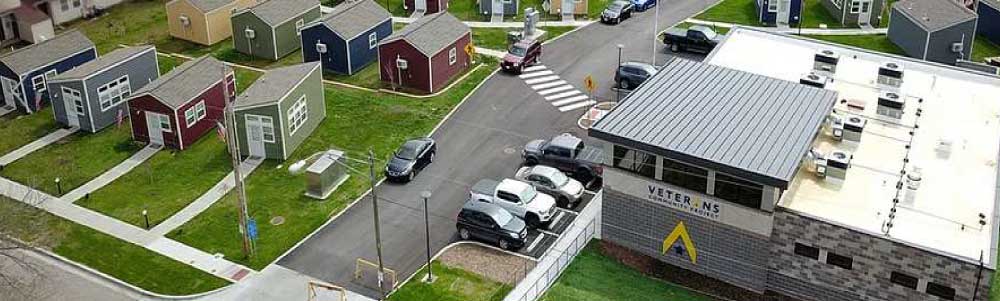
VCP Village – KC, located at 89th and Troost in Kansas City, Missouri, is an innovative community of 49 tiny houses for Veterans experiencing homelessness. The homes range in size from 240 to 320 square feet, meet all local city code requirements, and connect to city utility services. Approximately 70% of the Village construction was performed by community volunteers. Many Veterans arrive at VCP Village with little more than the pain, uncertainty, and loneliness of life on the streets. A tiny house provides everything he or she needs to live with dignity and safety, new furniture, appliances, housewares, bedding, food, and utilities, free of charge. More importantly, VCP Village provides sanctuary and the emotional space needed for the Veteran and VCP’s Veteran Support Services team to thoroughly address the underlying causes of his or her homelessness.
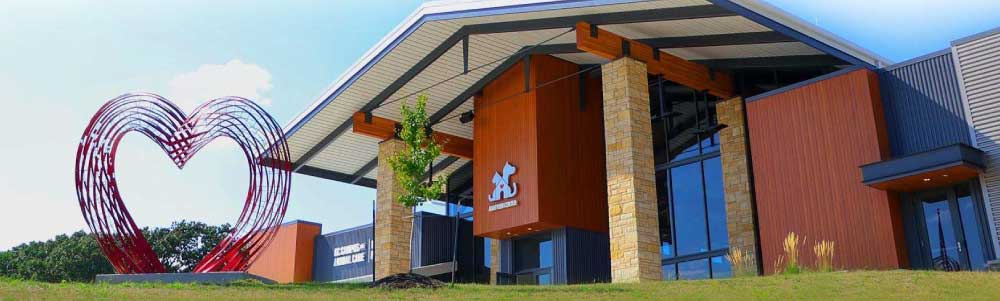
The purpose of KC Pet Project is to provide sheltering and animal services to the community of Kansas City, MO by placing pets into homes with families, enhancing public safety through animal control services, being a resource to people and pets in our community, reuniting lost pets with their owners, establishing pet retention programs, providing humane education opportunities, and enriching the lives of pets and people in Kansas City to build up and support a more safe and humane Kansas City. We are reimagining the role of animal services in our community.
Travis Kelce started Eighty-Seven & Running because of what he saw during his childhood. Growing up in the diverse suburb of Cleveland Heights, Ohio, his community transcended normal economic and cultural boundaries; merging rich and poor, black and white, and different religious affiliations into one big melting pot. Because of this, he noticed some of his closest friends didn’t have the same family structure he was blessed with and weren’t able to enjoy the same experiences. While he was supported by “the village” of family and individuals in the community, Kelce struggled in school and at times lacked the motivation to keep going. Many of the people he considered role models in the community never came back to support their hometown once they reached success. Because of these experiences, Kelce felt obligated to provide opportunities to disadvantaged youth and to help them aspire beyond their current situations. Now as tight end #87 for the Kansas City Chiefs, Kelce’s passion for changing the plight of youth experiencing adversity is the inspiration behind Eighty-Seven & Running.
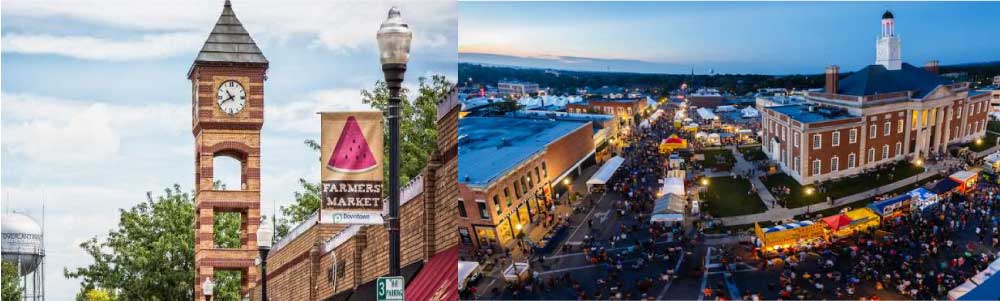
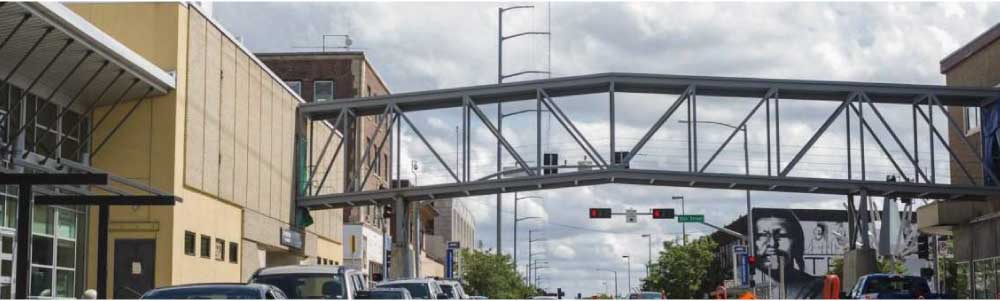
The National Main Street Center was established as a program of the National Trust for Historic Preservation in 1980 to address the myriad issues facing older and historic downtowns during that time. Working with a nationwide network of coordinating programs and local communities, Main Street has helped over 2,000 communities across the country bring economic vitality back downtown, while celebrating their historic character, and bringing communities together. An exciting new chapter for the organization began on July 1, 2013, when the National Main Street Center launched as an independent subsidiary of the National Trust. This transition enables Main Street to build on its three-decade record of success, with new leadership and new resources that will help communities respond to evolving needs and opportunities in the commercial district revitalization field. In 2015, the Center launched a new program brand for the network of Main Street programs — Main Street America.
We are best known for:
- We dedicate 10% of our repairs to our charity partners
- We dedicate 15% of our Comfort Partner Plan to our charity partners
- Offer Emergency Services
- Extend both equipment and financing options for all budgets
- Trained to diagnose and fix all makes and models
Our employees are very timely, showing up neat, clean, and equipped with the industry’s best tools to be able to do the job not only right the first time but also with promptness.
DEPENDABLE EMERGENCY REPAIR SERVICE IN RAYTOWN AND LEE’S SUMMIT
We know that air conditioners and furnaces always choose to break down when it’s the most inconvenient for you. Luckily, we stay open to make sure all your concerns are covered. Our on-call staff has the education to be able to walk you through all your options when it comes to your system.
DEFECTIVE HVAC SYSTEMS MAY:
- Release harmful gases
- Create electrical issues
- Cause uncomfortable temperatures in your home
- Continue to experience issues causing more needs for repair
We take as much pride in being able to work inside your home as you do in owning your property. We make a promise to treat your home with the respect, cleaning after ourselves, being sure to not leave a trace of us being there. If you need emergency service, call your friends at Hometown Heroes today!

Service was great. Andrew is very professional.

I had a great experience with Hometown Hero’s. I’d highly recommend them.

Highly recommend this company, especially Luis Lopez. Luis has worked on our air conditioning and furnace and is always very thorough and patient with all our questions.

Very through. Professional. Polite. And quick!

I requested an estimate online for a new HVAC system. Bryan came out on time, gave me a thorough quote to replace my heating and cooling. His quote included options for three different systems, each with a different efficiency/ cost. The entire process could not have been easier; no pressure and no nonsense. The techs showed up to do the install on time and left the work areas as clean as they found them. HIGHLY recommended.

Super fast service, great price and had my heater fixed in less than 30 minutes!

Main Street

Eighty-Seven

KC Pet Project
Veterans